Jiminy
Supporting mental health with friends and AI.
Product Design
Project overview
My Role: Product thinking, UX research, information architecture, interaction design
Timeline: 12 weeks
Tools: Figma, Miro, Pegasus
Industry: Mental health
Team: Ona Boseroy, Sharon Park
The challenge
Three ladies set out to help individuals tackle their mental health during these “unprecedented times” – all while working remotely.

Research
We suspect the problem is a lack of accessibility to mental health resources during the COVID-19 pandemic. We asked ourselves: How might we provide necessary resources to those in need, particularly young people of color or those in marginalized groups?
To better understand these challenges, we interviewed seven participants between the ages of 25 and 30. Our target audience includes individuals who face obstacles seeking help due to safety concerns, limited awareness, or a lack of accessible resources.
Our research goals were simple:
External factors as a result of COVID-19
How conditions affected by COVID-19 have impacted mental health
Resources (apps, therapy, etc.) that are most helpful
How one’s socioeconomic identity has been affected by mental health care accessibility


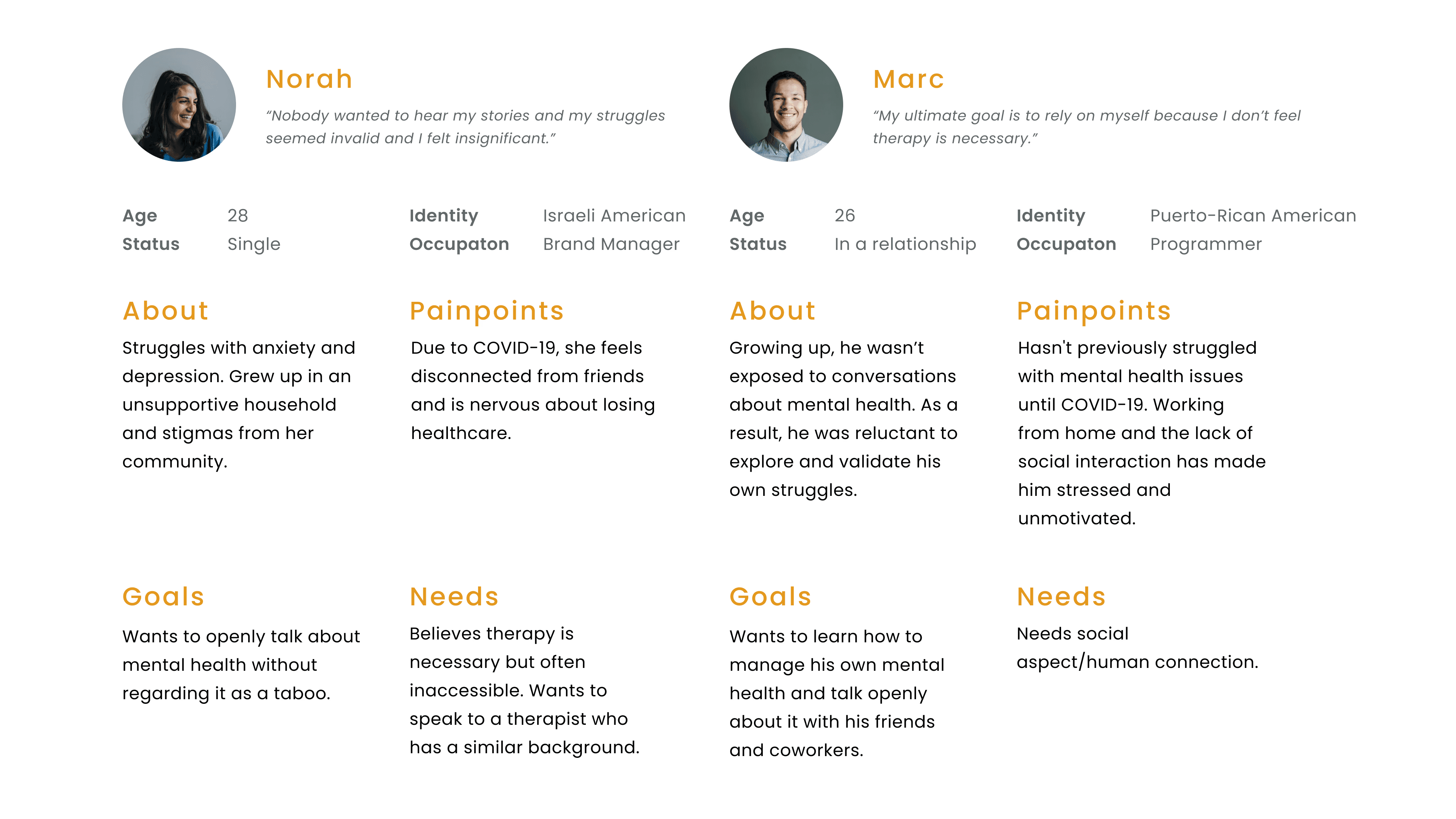
We developed a couple of personas to hone in on our target audience's needs. We came up with a few 'How might we…' statements to get better clarity.
How might we…
...provide Norah with a safe space to discuss her stories and feel validated?
…help Marc learn about mental health to continue the conversation openly?
…help Norah find someone who can best empathize with her and manage her mental health?
Based on our initial findings, we pivoted our approach. User research showed that traditional mental health care, like therapy, was often seen as unhelpful and added stress. We now focus on helping users integrate personal mental health management with supportive social activities.


Takeaways
Our competitor analysis revealed that existing community discussion boards lacked a constructive approach. We aimed to find alternative ways for users to interact with one another.
Ideation
Our main focus was to bring together individuals on a platform to discuss their mental health. We brainstormed potential features that would be essential and compiled them using Miro.

Takeaways
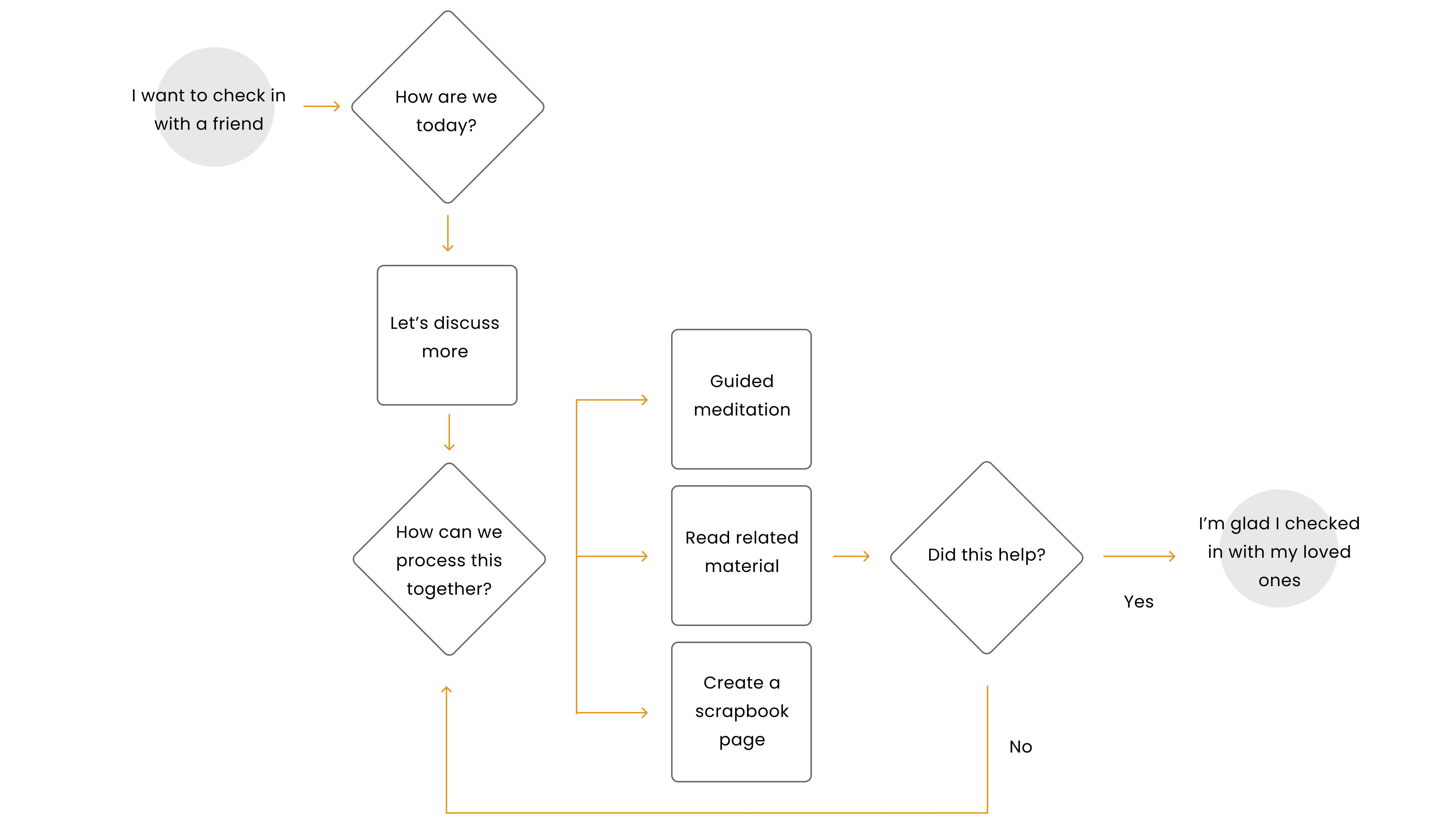
We determined that intimate check-ins and supported resources were crucial to our user. How do we approach the social aspect though?
I thought – why not have users engage with someone they already know? That way they have the option of approaching their mental wellness with a trusted ally.


Early in our process, we prioritized researching AI capabilities and found that supporting two users simultaneously wasn’t feasible. Embracing a “anything is possible” mindset, we adopted an algorithmic approach where users select inputs from a list to receive results. We also explored ideas for a two-person-plus-moderator conversation format through sketches.

Design
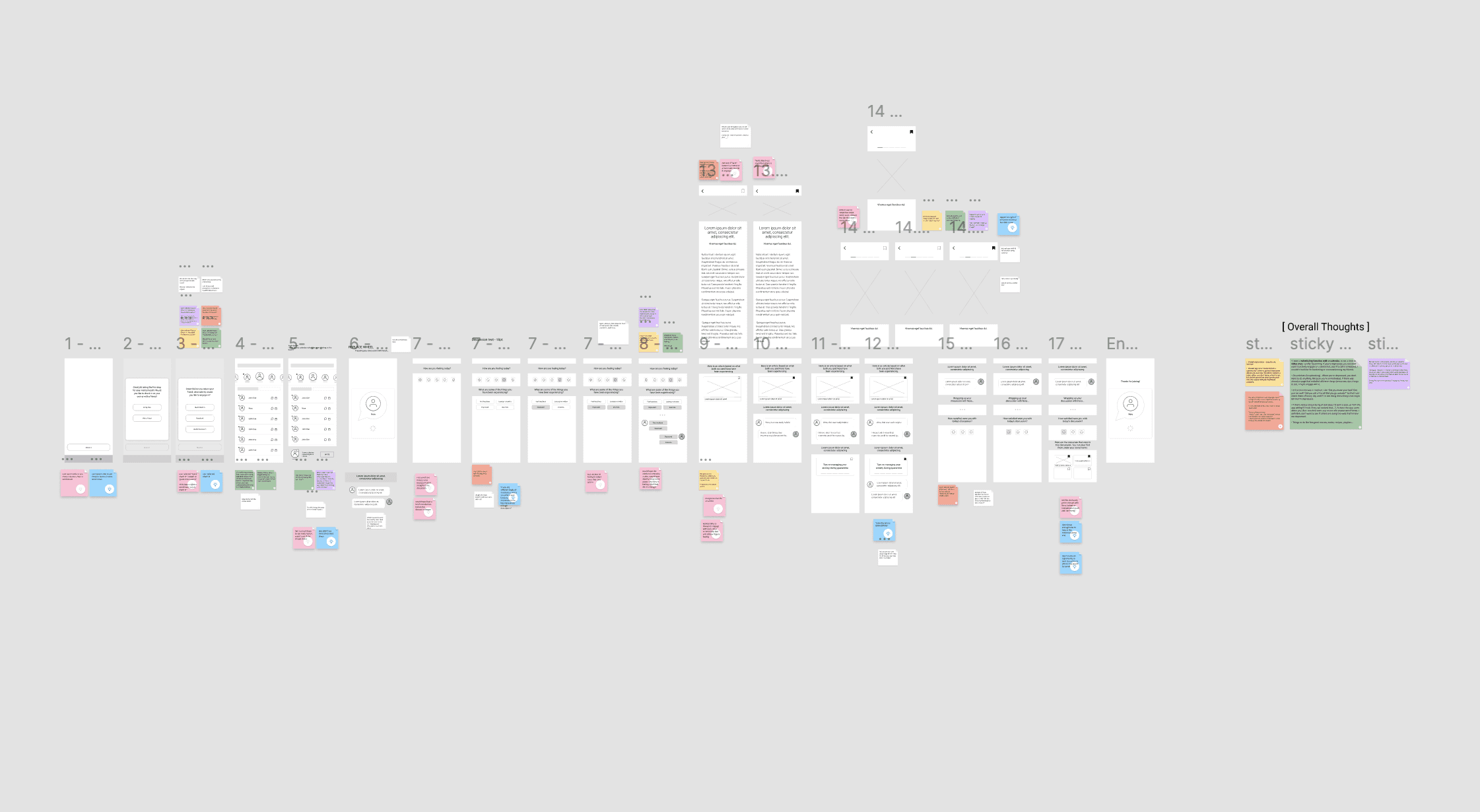
We utilized Figma to layout, produce and prototype our ideation. We aimed to conduct at least two usability tests.


We followed our design principles to help us with the visual design.
Accessible: Since we can’t help make therapy itself more accessible, we can at least ensure accessibility of our app for all users.
Intuitive and familiar: Since mental health needs a good amount of focus, we’re not in the business of surprising users with new or flashy features. We don’t need to add to the overwhelm they might already be feeling. We want to be their relief.
Transparent: We want the user to feel safe on our app. From clear privacy policies to making sure users know where to find everything, we want to make sure we remain transparent and communicative.
Guided and reliable: We want our users to feel like they can lean on us. From guided discussions to private archival, we ensure our users feel like they can rely on us to guide them through the mental health care process.

Testing
Hi-fi usability test
We tested our second prototype with four participants.
Painpoints
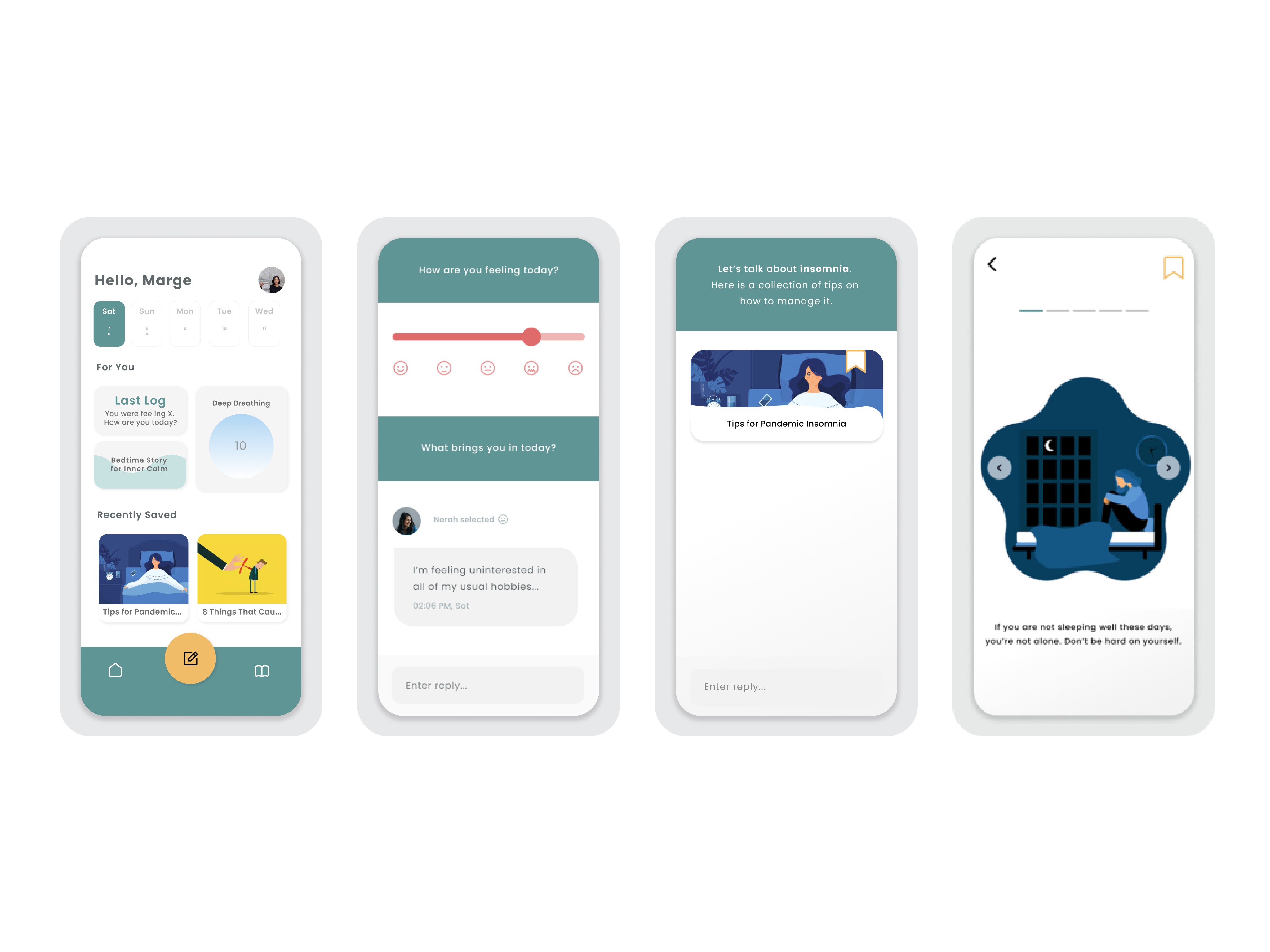
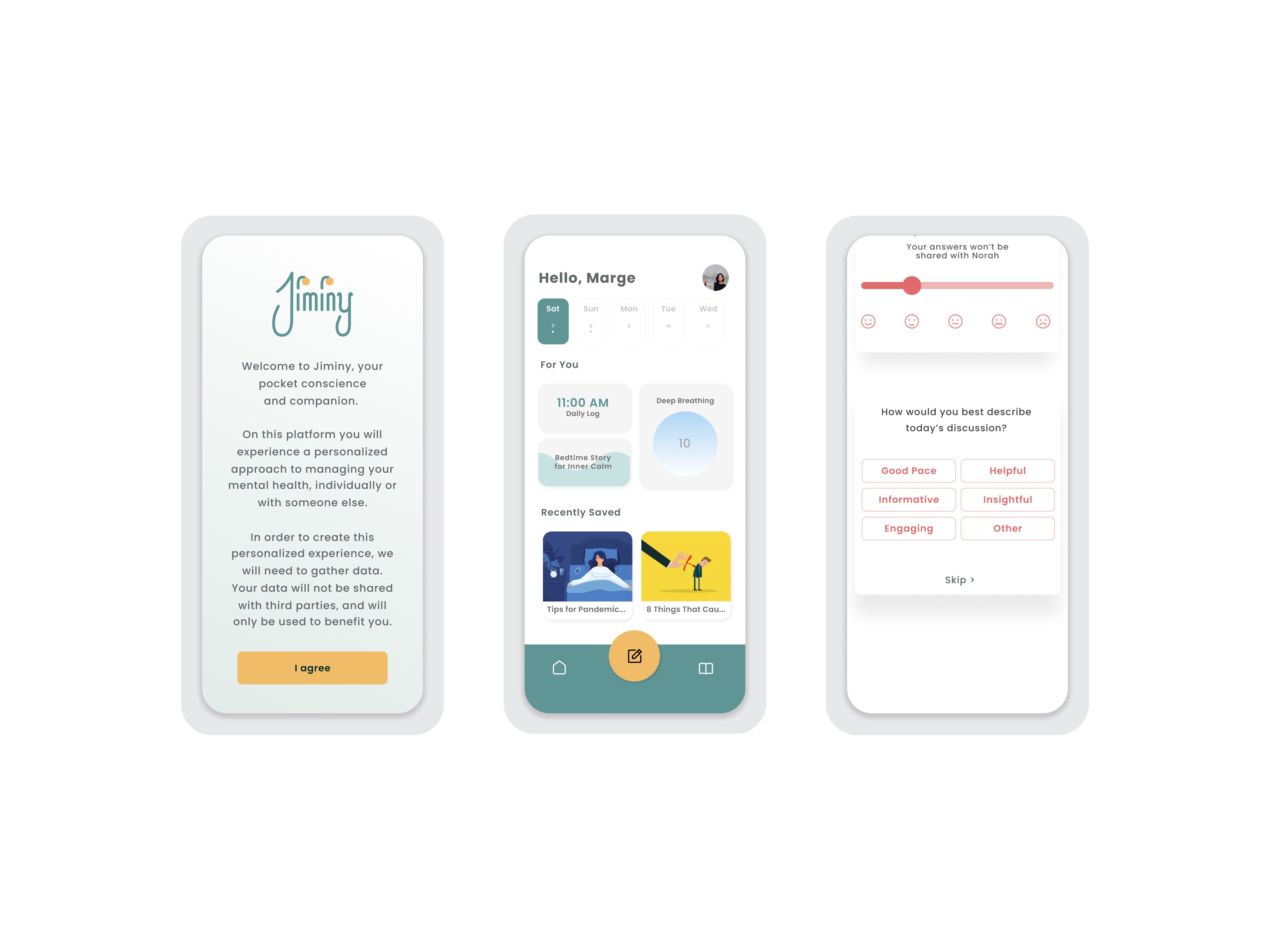
We came across a few pain points with interactivity. 75% of users didn’t know how to initiate a check-in on the dashboard. 75% of users used the toggle button to the undesired effect.
Iteration
We replaced our call-to-action button from a ‘plus sign’ to a ‘pencil’ icon, insinuating the user to start a conversation. Then we noticed our users associate feelings of contentment to sadness starting at left to right respectively.
Next steps
Our next steps include prototyping an individual check-in, creating an on-boarding guide, and designing the archive key screens.