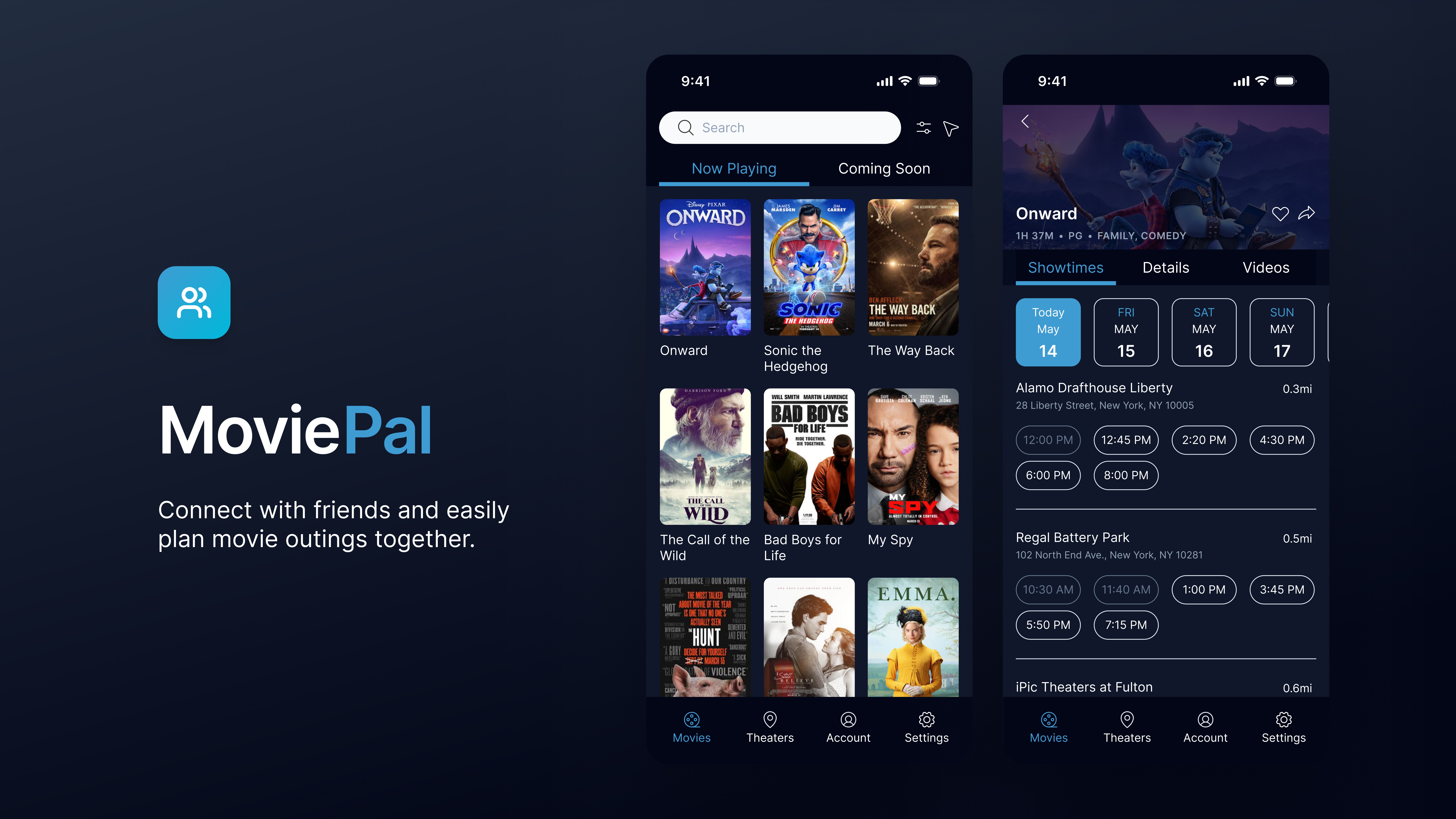
MoviePal

Connect with friends and easily plan movie outings together.

Product Design
Project overview

My Role: Product designer
Timeline: 8 weeks
Tools: Figma, Miro
Industry: Entertainment


The challenge

I was intrigued by the growing popularity of movies being released on streaming services and wanted to know: Will movie theaters be here to stay? I suspected fewer people are attending movie theaters in recent years due to this.
Research

Target Audience
Young adults, ages 18–35, who are interested in movies as a passion or past time

Interviewees
Six participants residing in metropolitan areas

Research Goals

  1. How often do users go to the theaters

  2. Factors that affect their desire to go

  3. Positive/negative experiences

  4. Features at the chain and local theaters

  5. Buying tickets

Problem statement
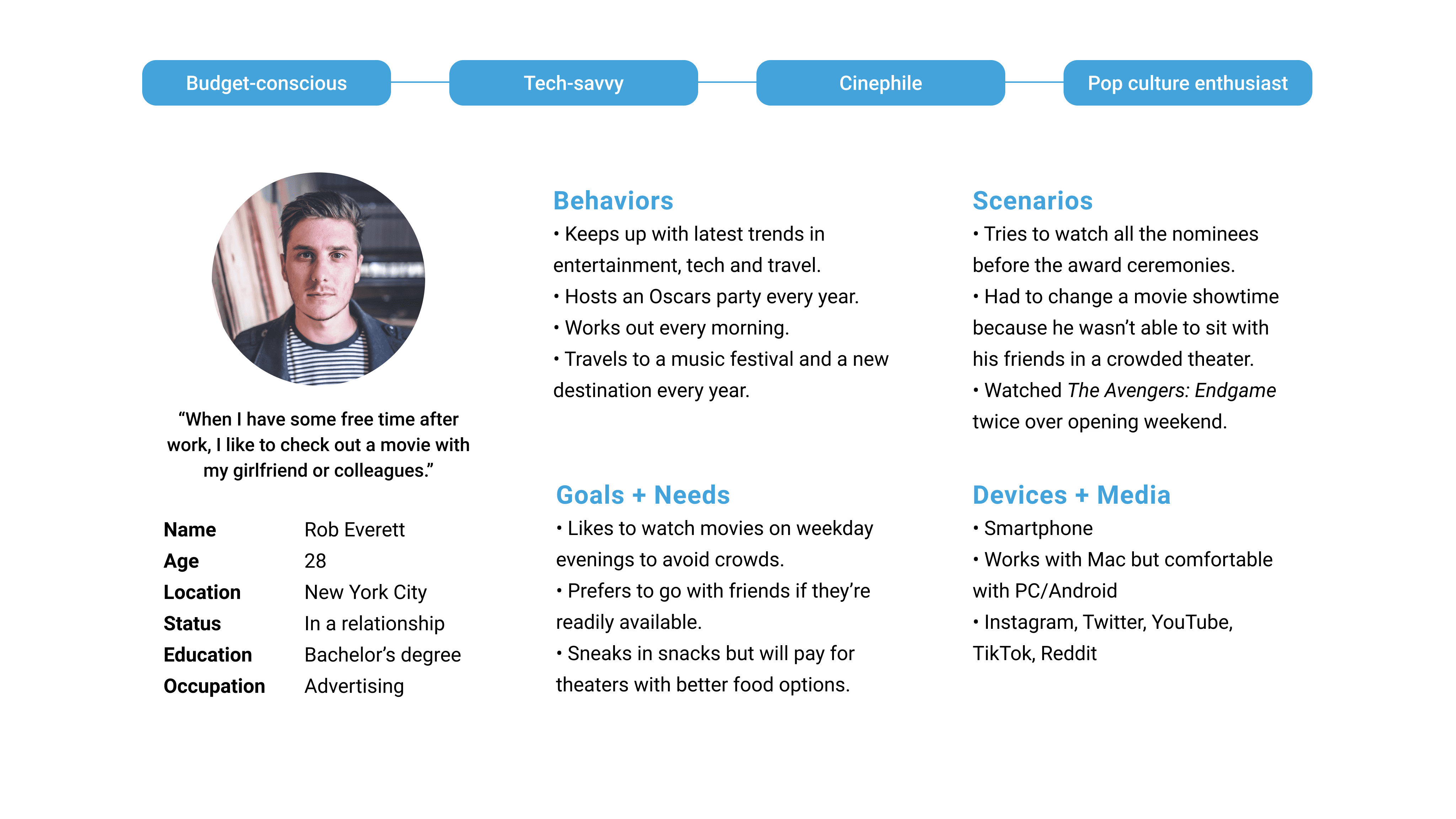
Rob needs an easy way to book a movie with friends that doesn't cost much, since watching with companions and theater proximity are major motivators for him, while high ticket prices are not.

Hypothesis
By creating a one-stop platform for movie-goers, we can help users easily attend movie showings with friends without the hassle of comparing prices at different theaters. We'll know we're successful when users invite friends to multiple showtimes through our platform.

Competitive analysis
I researched existing movie theater app platforms to gain a sense of what users were getting. Research included AMC Stubs, Regal Crown Club, Fandango VIP+, and Cinemark Rewards. I also researched an analogous competitor, ClassPass.

Takeaways

Existing competitors each offer their own reward systems, varying in features and business models. For example, ClassPass—a comparable platform—includes a Friends feature that enables users to invite friends to a workout class. Notably, this social feature is lacking among direct competitors in the movie space, representing a missed opportunity for differentiation.


Ideation

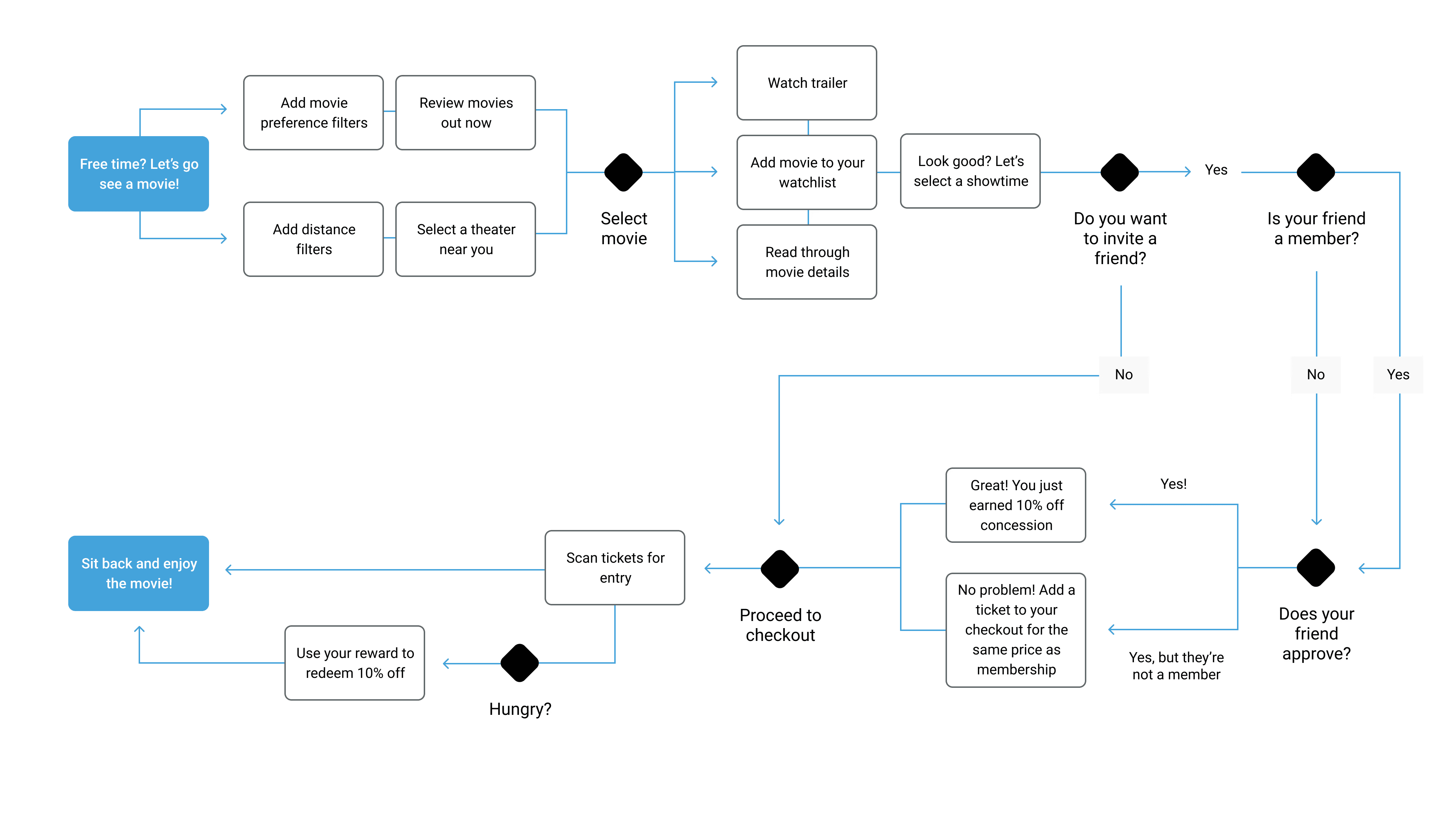
I reimagined how friends could commit to seeing movies in theaters, exploring several solutions that benefit both theaters and consumers. Ultimately, I blended elements from competitors’ subscription models and tailored them to meet my users’ needs.

Takeaways

Defining primary, secondary, and utility features allowed me to focus on the MVP. Inviting a friend to a shared movie showtime emerged as an unexpected but impactful feature. How would this interaction look in the real world?


Sketches

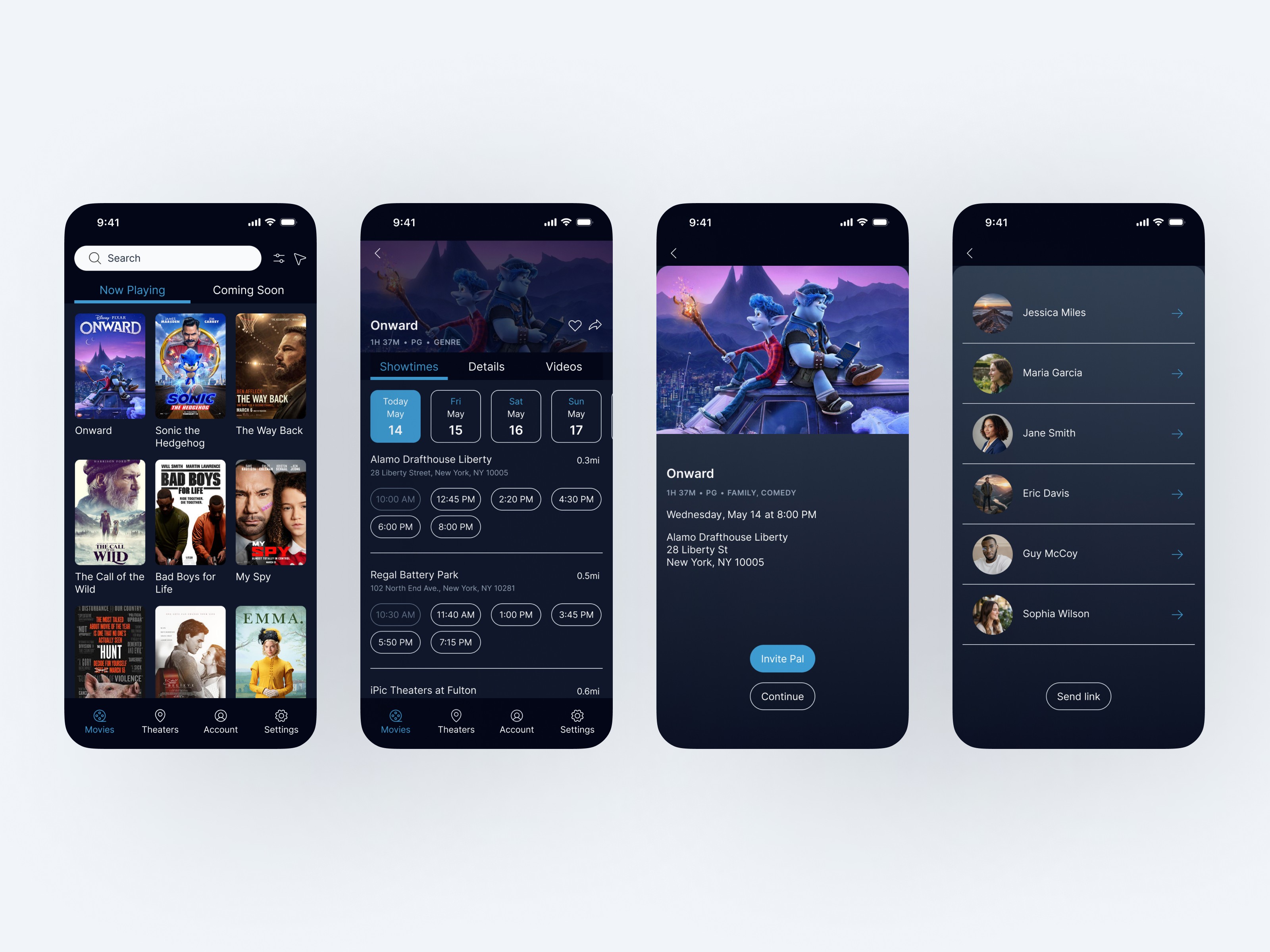
I chose to design a native app to prioritize user accessibility and leverage core features like native sharing, location services, and notifications. My goal was to conduct at least two usability tests.

Usability testing

For my initial usability test, I provided clear content and labels to guide participants. Five individuals from the target audience took part.

  • 60% of users completed the first task: selecting a movie showtime.

  • For the next task—inviting a friend named Guy—40% succeeded. Several users misunderstood the term "Inviting a Friend" and interpreted it as a different action.

  • After the invitation, 100% of users were able to confirm event details with Guy

  • These results suggest clearer wording around the "invite" feature could enhance user success.


Takeaways
  • Implementing an onboarding process before users access the main hub could improve overall understanding and navigation.

  • The "Invite a Friend" layout requires redesign, and additional enhancements should be considered to improve this functionality further.


Visual design

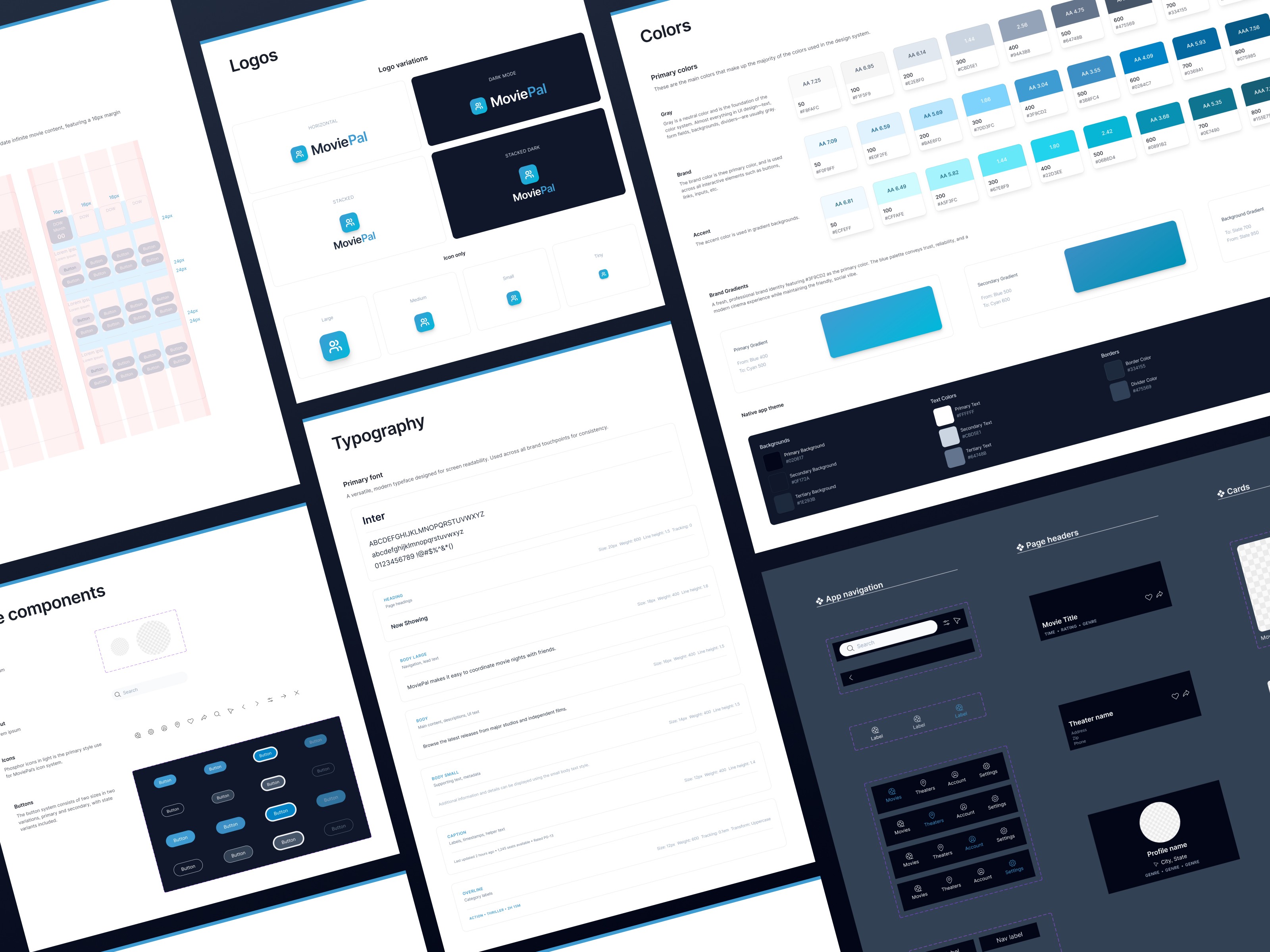
The final step was building the product branding. I chose the name MoviePal and a blue color palette to accompany it. This palette communicates trust, reliability, and a modern cinema experience, while also keeping the friendly, social vibe that makes MoviePal unique.